Writing tip, how you shouldn’t end your composition (Part III)

Writing tip: Here’s part III on how you shouldn’t end your composition. (See part II here https://www.facebook.com/photo.php?fbid=198039540368604&set=a.175449439294281.1073741828.175114272661131&type=1) Don’t end your story abruptly. More often than not, students don’t manage their time well and panic when you see the time is almost up. Imagine watching Superman: Man of Steel at the theatre. After the exciting fight[…]


Writing tip, how you shouldn’t end your composition (Part II)

Writing tip: On Aug. 1, we advised students not to end the story by saying it’s a dream. (See link: https://www.facebook.com/photo.php?fbid=184968275009064&set=pb.175114272661131.-2207520000.1378436313.&type=3&theater) Over the next few days, let’s examine other atrocious methods to conclude your composition. Conclusion 2: What’s Worse Than a Dream? Asking your reader "Was I dreaming or was it real?" Make up your[…]

Concise English

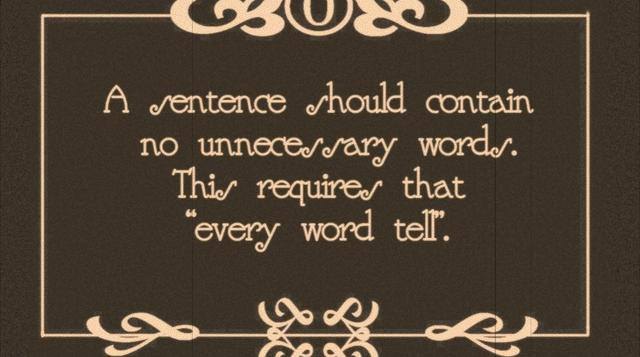
English tip: We mentioned sentences need to be concise and tight. We must avoid needless words. The use of "who" and "which" sometimes result in such redundancy. For example: Before: He is a man who is very sly. After: He is very sly. Before: Disneyland is always a theme park which I have always wanted[…]

Colon versus Semi-colon

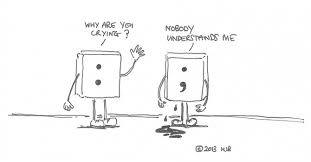
English tip: I was asked how/when to use a colon and a semicolon. A colon : Use a colon to set off a summary. For example: There were so much food at the party: chicken pie, curry fish head and french fries. A semicolon: This is stronger than a comma, less forceful than a full-stop.[…]

Shortening and tightening sentences

English tip: We talked about using the active voice yesterday. Sometimes, when we use affixes, it shortens the sentences, tightening the language. Here are some examples: He is not honest–> He is dishonest This is not a usual situation. –> This is an unusual situation. He was better than his classmates –> He outperformed his[…]

Use the active voice

English tip: Always use the active voice in your composition. It’s more direct and more vigorous. For example: Active: I like my cat. Passive: The cat is liked by me. Active: The children ran around the school compound. Passive: The school compound was filled with running children. The active form is stronger, shorter and reads[…]

Compare to or compare with?

English tip: There’s a difference between "compare to" and "compare with." Here’s how you differentiate them. *To "compare to" is to suggest resemblances between things that have different natures: Examples: He compared his looks to Ryan Gosling’s. What an inflated ego he has! Jame’s mother compared his room to a dump. James must be very[…]